Biology

Grid List

Showing 41–60 of 275 results

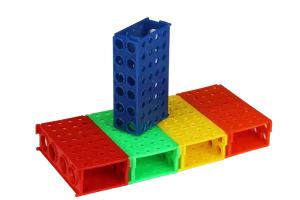
Combi rack for various test tubes

Combi rack for various test tubes

This combination rack is made of polypropylene (PP) and has four sides with different hole sizes, making it suitable for several types of tubes in the laboratory. The rack can accommodate 4 tubes of 50 mL (Ø29 mm), 12 tubes of 15 mL (Ø16 mm), 32 tubes of 1.5/2 mL (Ø11 mm) or mini test tubes of 10–12 x 75 mm, as well as 32 PCR tubes of 0.5/0.2 mL (Ø7.5 mm). The color may vary from the image.

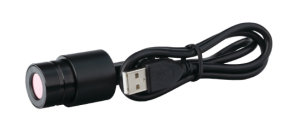
Compound Microscope Eyepiece Camera

Compound Microscope Eyepiece Camera

General use digital 3.1 MP eyepiece camera fits in place of the eyepiece lens in most standard (23mm mount) body tubes.

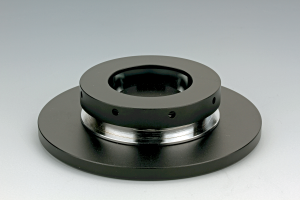
Density Circulation Model

Density Circulation Model

Model, measure and understand complex density driven circulation associated with heat transfer through convection.

Dialysis tube, 25 mm wide, Ø16 mm

Dialysis tube, 25 mm wide, Ø16 mm

The dialysis tubing is a semipermeable membrane tubing intended for osmosis and diffusion experiments. The tubing is supplied as a 5 meter roll and is 25 mm wide in flat form, while it achieves an internal diameter of approximately 16 mm when filled with liquid.

Dicot Stem model, small

Dicot Stem model, small

The model shows the structure of a stem from a dicotyledonous plant. The vascular and spicate parts are marked in clear colours so that students can see the vascular system. The growth zone is shown in yellow-green and the dermis is in dark green, while non-functional wood is shown in light green.

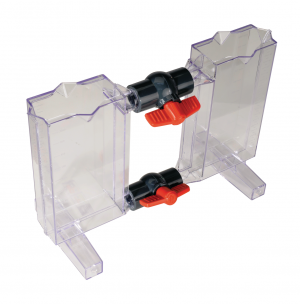
Diffusion/Osmosis Apparatus

Diffusion/Osmosis Apparatus

Allows students to explore the rate of water movement and quantify pressure changes occurring in the system.

Diffusion/Osmosis Kit

Diffusion/Osmosis Kit

Allows students to explore the rate of water movement and quantify pressure changes occurring in the system.

Digital microscope, USB, 5 MP

Digital microscope, USB, 5 MP

Smart USB macro magnifier with 5 MP resolution and included stand, which makes it easy for you to examine small details and surfaces on the screen. The macro magnifier has a built-in LED light with 8 diodes and light control, so you can adjust the lighting as needed. With the included stand, you get a slightly larger working distance and lower magnification, while if you use the magnifier directly on a surface, you can easily adjust the magnification and focus with the focus wheel. The magnifier connects to your computer via USB and comes with Windows-compatible software, where you can both view live images and record photos or videos.

Dissection kit

Dissection kit

Complete set for the laboratory or to take into the field.

DNA Model 50cm

DNA Model 50cm

Assembled
As FR-527565, but with 12 base pairs:thymine (t), 6 adenine (A), 6 guanine (G) & 6 cytosine (C).
The side chains consist of dextroribose (red) and phosphate (purple), which can also be separated.

DNA model, 12 layers

DNA model, 12 layers

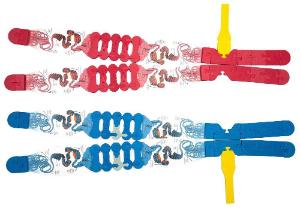
The model has 12 base pairs: 6 thymine (t), 6 adenine (A), 6 guanine (G) and 6 cytosine (C).
The side chains consist of dextroribose (red) and phosphate (purple), which can also be separated.

DNA model, 22 layers

DNA model, 22 layers

This DNA model makes it easier to study the double helix structure.
The model contains 22 base pairs consisting of:
12 thymine (T) (orange), 11 adenine (A) (blue), 11 guanine (G) (green),11 cytosine (C) (yellow).

DNA model, large, for hanging

DNA model, large, for hanging

Large, attractive DNA model, which can be mounted on a tripod pole or hung from the ceiling.
Shows DNA in double helix with 12 base pairs with correct bond angles

Ear Model, 3 parts, 3x enlarged

Ear Model, 3 parts, 3x enlarged

Divisible into 3 parts, approx. 3x enlarged.

With removable eardrum with hammer, anvil plus stirrup and auger with balancing organ.

Earthworm viewing chamber, 20 x 30 x 5 cm

Earthworm viewing chamber, 20 x 30 x 5 cm

The worm farm (20 x 30 x 5 cm) is made of clear acrylic and equipped with two removable glass panels for easy cleaning. It is designed to provide an insight into the life of earthworms in the soil, including their role in aeration, mixing of soil layers and decomposition of organic matter.